- +44 20 4529 7897
- contact@blinkfacilites.com
- 7 The Forum, Minerva Business Park, Lynch Wood, Peterborough
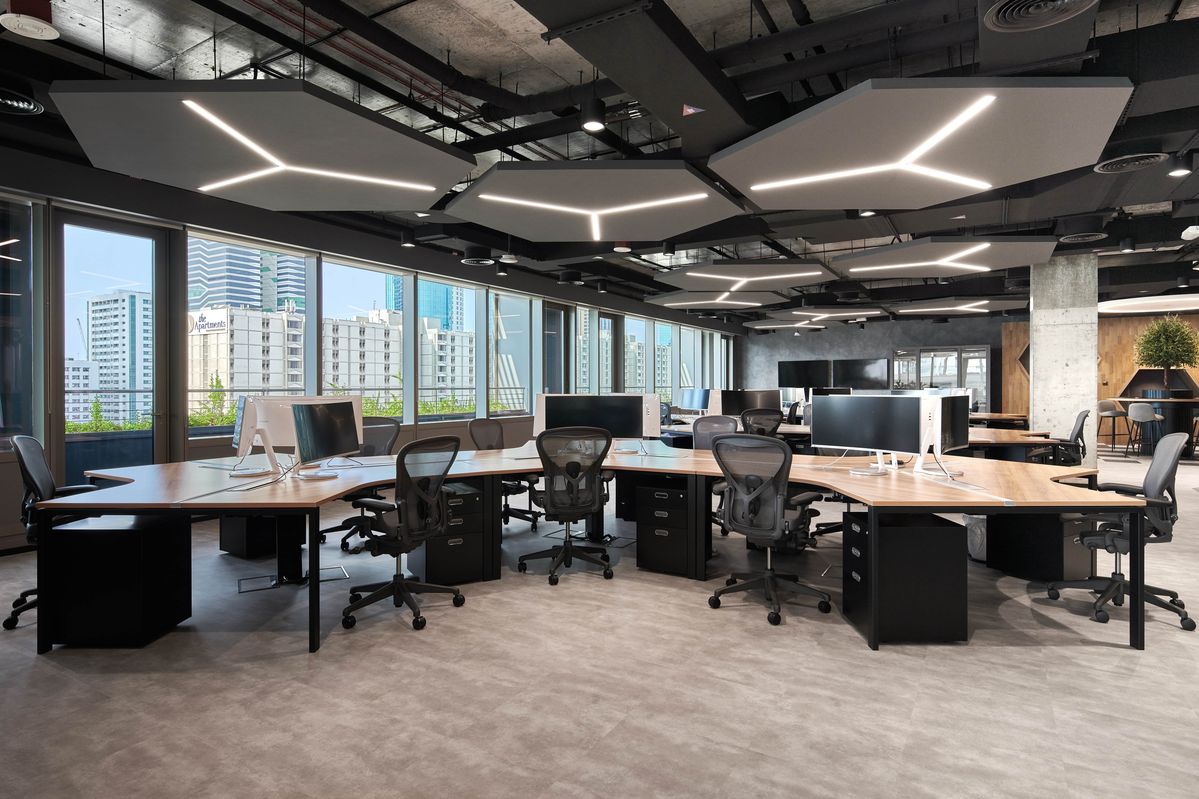
An office refurbishment can completely change how your business looks and feels. A better layout, modern interiors, improved lighting, and smarter spaces can boost morale and productivity.
But let’s be honest — the biggest fear for most businesses is disruption.
Noise, dust, delays, confused teams, and lost working hours can quickly turn an office refurbishment into a nightmare if it’s not planned properly.
The good news? With the right strategy — and the right partner like Genesis Blink Facilities — you can upgrade your workspace without stopping your daily operations.
In this guide, we’ll walk you through a practical, step-by-step approach to planning an office refurbishment while keeping your workflow running smoothly.
Workspaces today are not just about desks and chairs. They directly impact performance, wellbeing, and employee retention.
A study by Gensler’s Workplace Survey found that:
Employees working in well-designed offices are up to 33% more productive.
That’s a huge difference.
Office refurbishment is no longer a luxury — it’s a business investment. Companies working with experts like Genesis Blink Facilities often see faster project delivery and better long-term results because planning is done around real business needs.
Before calling contractors or designers, ask one simple question:
Your goals will shape every decision.
Common office refurbishment goals:
Improve productivity
Support hybrid working
Increase collaboration
Add meeting rooms
Modernise interiors
Improve employee experience
Optimise space usage
Write your goals down. Share them with your management team. This keeps the project focused and avoids unnecessary changes later.
At Genesis Blink Facilities, goal-setting is always the first stage of any office refurbishment project.
You can’t fix what you don’t measure.
Start with a simple workplace audit.
Look at:
How many desks are used daily?
Which areas feel crowded?
Where do people complain?
Which rooms are underused?
Where is noise a problem?
This helps you avoid guessing.
Many office refurbishments fail because they are based on assumptions, not real usage. Professional workspace teams like Genesis Blink Facilities use real data and space planning tools before redesigning any office.
The smartest way to avoid disruption is phased execution.
Instead of refurbishing the whole office at once, break it into stages.
Example:
Reception + meeting rooms
One department floor
Breakout areas
Final finishes
This allows teams to move around while work continues.
Phased office refurbishment is one of the most effective strategies used by Genesis Blink Facilities to keep businesses fully operational during projects.
Silence creates resistance.
People fear change when they don’t understand it.
Tell your employees:
What is happening
When it will start
Which areas are affected
How long it will take
What benefits they’ll get
When employees feel involved, they become supportive instead of stressed. This is something Genesis Blink Facilities strongly focuses on during every office refurbishment.
This is the most critical step.
A good office refurbishment company doesn’t just build — they plan, manage, and protect your operations.
Look for partners who offer:
End-to-end project management
Phased execution experience
Out-of-hours work
Health & safety compliance
Minimal disruption planning
This is exactly where Genesis Blink Facilities stands out — combining design, planning, and execution under one roof.
If space allows, create temporary work areas.
This keeps teams productive while work happens elsewhere.
Options:
Hot-desking
Remote working days
Temporary meeting rooms
Co-working spaces
Even moving 20–30% of staff temporarily can make the entire office refurbishment smoother.
These are the top three disruption triggers.
Smart solutions:
Acoustic barriers
Dust screens
Clear safety signage
Restricted work zones
Proper ventilation
Professional office refurbishment teams like Genesis Blink Facilities always plan for employee comfort and safety first.
Nothing kills productivity faster than lost internet.
Before starting your office refurbishment:
Backup all data
Map cable layouts
Protect servers
Plan Wi-Fi zones
Work closely with your IT team.
Connectivity should never be an afterthought in any office refurbishment project.
Office refurbishment projects often fail due to poor tracking.
Hold short weekly reviews:
What’s completed?
What’s delayed?
What’s next?
Any risks?
This keeps the project on time and avoids surprises.
Before everyone moves back:
Test lighting
Test air conditioning
Test internet
Test meeting rooms
Test access systems
Small checks prevent big complaints.
When done properly, office refurbishment delivers long-term business value.
Key benefits:
Higher employee morale
Better space utilisation
Stronger brand image
Increased collaboration
Improved productivity
Easier hiring & retention
In short: a better office creates better business.
Office refurbishment does not have to mean chaos.
With:
Proper planning
Clear communication
The right partners
Phased execution
You can modernise your workspace without stopping your business.
This is exactly the approach followed by Genesis Blink Facilities — delivering modern workspaces while protecting daily operations.
A successful office refurbishment is not about how fast you build — it’s about how smoothly your business continues while you build.
When planned correctly, office refurbishment becomes a growth strategy, not a disruption.
If you’re planning to upgrade your workspace, partner with experts who understand business continuity.
👉 Genesis Blink Facilities helps businesses design, refurbish, and transform offices without workflow disruption.
Speak to our team today and create a workspace that truly works for you.
Small projects take 2–4 weeks, large projects may take 2–3 months.
Yes. With phased planning, most work can continue normally.
On average, £40–£120 per square foot depending on scope.
A professional company like Genesis Blink Facilities ensures minimal disruption and smooth execution.
7 Minerva Business Park Peterborough
PE2 6FT
Bowman House Business Centre, Swindon, SN4 7DB
200 Brook Drive, Reading, RG2 6UB